
Taiwan is expanding its economic and diplomatic presence in the United States with the opening of a new representative office in Phoenix, Arizona, as the island strengthens its relationship with one of America’s most important semiconductor manufacturing hubs.
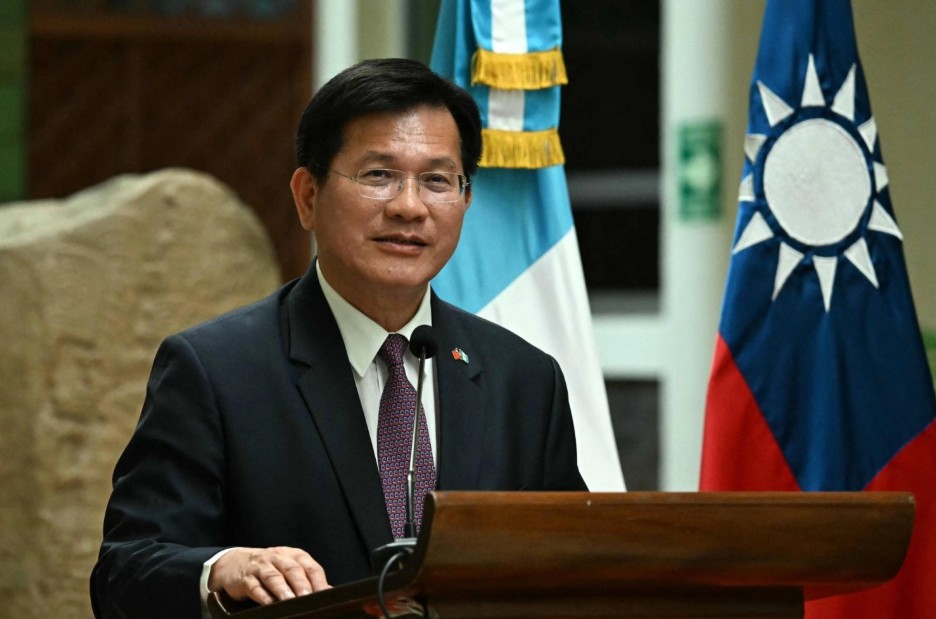
Taiwanese Foreign Minister Lin Chia-lung traveled to Arizona for a three-day visit to inaugurate the Taipei Economic and Cultural Office in Phoenix, effectively a de facto consulate because Taiwan and the United States do not maintain formal diplomatic relations.
The new office becomes Taiwan’s 14th representative office in the United States and represents a significant expansion of Taipei’s presence in a state that has rapidly become central to the global semiconductor industry.
At the heart of that relationship is Taiwan Semiconductor Manufacturing Company, or TSMC, the world’s leading contract chip manufacturer.
TSMC is investing approximately $265 billion in Arizona, creating a massive semiconductor manufacturing complex intended to produce increasingly advanced chips in the United States.
Taiwan’s government says that investment has encouraged a broader ecosystem of Taiwanese technology and supply-chain companies to establish operations in Arizona.
The Phoenix office is designed to support that expanding commercial presence while strengthening cooperation in technology, investment, education and critical supply chains.
During his Arizona visit, Lin is expected to meet state and local officials, including Arizona Governor Katie Hobbs and Phoenix Mayor Kate Gallego. He is also meeting Taiwanese business representatives and members of the Taiwanese-American community.
The visit underscores how U.S.–Taiwan relations increasingly extend beyond Washington and traditional security cooperation.
Semiconductors have become a particularly important connection.
Taiwan dominates production of the world’s most advanced chips, which are essential for artificial intelligence, smartphones, data centers, automobiles and military technology. Washington has sought to bring more semiconductor production onto American soil to reduce vulnerabilities in global supply chains.
Arizona has become one of the principal beneficiaries of that strategy.
TSMC’s first Arizona fabrication plant entered mass production in late 2024. Construction of a second facility has been completed, with production expected to begin in the second half of 2027, while a third fabrication plant is under construction.
The growing Taiwanese presence also carries geopolitical significance.
The United States formally recognizes the People’s Republic of China rather than Taiwan, but Washington remains Taiwan’s most important international partner and its principal arms supplier.
Beijing claims Taiwan as part of its territory and has repeatedly demanded that Washington end arms sales and official interactions with Taipei. Taiwan’s democratically elected government rejects Beijing’s sovereignty claims.
The timing of Lin’s visit is therefore sensitive.
It follows recent discussions between President Donald Trump and Chinese President Xi Jinping, as Washington attempts to manage its complicated relationship with Beijing while maintaining extensive economic and security connections with Taiwan.
Taiwanese officials have emphasized the economic purpose of the Arizona expansion rather than presenting it as a formal diplomatic shift.
The Phoenix office illustrates a broader transformation in U.S.–Taiwan relations: economic security, advanced technology and traditional diplomacy are becoming increasingly interconnected.
Taiwan’s semiconductor companies need access to American customers, technology and investment opportunities, while the United States wants greater domestic production of the advanced chips that power its economy and national-security infrastructure.
For Arizona, that convergence is creating a rapidly expanding semiconductor ecosystem.
And for Taiwan, establishing a permanent presence in Phoenix provides a way to support its companies, strengthen relationships with American state and local governments and deepen economic ties with the United States without changing the countries’ formal diplomatic status.
The new office may therefore look like a relatively modest diplomatic expansion, but its location reveals something much larger: Arizona is becoming one of the most important physical links connecting Taiwan’s semiconductor strength with America’s effort to rebuild advanced manufacturing at home.