
President Donald Trump is preparing to unveil approximately $54 billion in proposed South Korean investment connected to Alaska’s massive liquefied natural gas project and other U.S. initiatives, potentially providing new momentum to an energy development that has been discussed for decades but repeatedly struggled with financing and commercial viability.
The investment would draw from commitments South Korea made under a 2025 trade agreement with the United States.
Under that agreement, Seoul pledged $350 billion in U.S. investments in exchange for Washington reducing tariffs on South Korean automobiles, auto parts and other products.
The centerpiece of the latest announcement is expected to be Alaska LNG, an enormous infrastructure project designed to transport natural gas from Alaska’s North Slope to the southern coast.
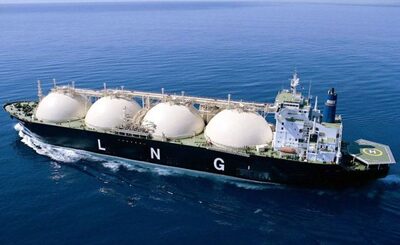
The development would include an approximately 800-mile pipeline connecting northern gas fields with a liquefaction and export terminal in Nikiski. Once converted into LNG, the gas could be shipped across the Pacific to customers in South Korea, Japan and other Asian markets.
Estimates put the overall project cost between roughly $44.5 billion and $54.5 billion.
Supporters argue that Alaska’s location provides a strategic advantage because LNG tankers could reach Asian customers more quickly than shipments departing from terminals on the U.S. Gulf Coast.
The project is currently 75% owned by Glenfarne Group, while the state of Alaska controls the remaining 25%.
Developers are targeting a final investment decision on the pipeline in 2026 and on the export facility in 2027, with the first LNG exports potentially beginning in 2031.
However, substantial uncertainties remain.
The project has secured agreements covering approximately 13 million metric tons of LNG annually from prospective customers in Japan, South Korea, Taiwan and Thailand, as well as French energy company TotalEnergies. Many of those agreements remain nonbinding.
Developers need additional commitments — and ultimately binding contracts — before securing the enormous financing required for construction.
South Korean officials have also approached the project cautiously.
Seoul has continued evaluating whether Alaska LNG makes commercial sense given its enormous construction costs and competition from established U.S. Gulf Coast exporters and emerging Canadian LNG projects.
South Korean officials have indicated that participation in Alaska LNG remains subject to further negotiations rather than representing an unconditional investment commitment.
The announcement also arrives during an important political moment in Alaska.
Republican Senator Dan Sullivan, a longtime advocate of Alaska LNG, is seeking reelection against former Democratic Representative Mary Peltola. The race is receiving national attention as Democrats seek the net gain of four Senate seats necessary to take control of the chamber.
Trump has repeatedly promoted Sullivan’s work on Alaska energy development and has said he intends to visit the state.
The White House’s Alaska announcement follows another major foreign-investment event in Iowa, where Trump recently highlighted plans for a $15 billion steel facility. Republican and Democratic candidates are also competing for an open Senate seat there.
The administration is presenting these investments as evidence that its trade policies are attracting foreign capital and creating economic opportunities in the United States.
Democrats, meanwhile, are campaigning heavily on concerns about living costs and the broader economy.
The Alaska LNG proposal therefore sits at the intersection of several major issues: U.S. energy policy, Asian energy security, international trade, foreign investment and the approaching midterm elections.
For Alaska, however, the underlying ambition is much older.
The state has spent decades searching for an economically viable way to commercialize its enormous North Slope natural-gas reserves.
If South Korean investment ultimately becomes firm financing and the project moves into construction, Alaska LNG could finally transform those reserves into a major export industry.
But the distinction remains crucial: announcing tens of billions of dollars in potential investment is not the same as completing financing, construction or long-term sales agreements.
The next stage will determine whether the latest international commitments finally turn Alaska’s decades-old LNG vision into physical infrastructure — or become another chapter in the project’s long history of ambitious plans.